|
I came across the article below, and I found it fascinating because what the article describes is how I had been training my dog walkers to walk our dogs! always being and staying alert!
"Walking is a simple, low-impact activity that people of almost any age can do to help stay in shape, but there are still dangers. In order to keep yourself safe as a pedestrian, there are a few rules of thumb you need to keep in mind. This is doubly true if you find yourself walking on the road itself, and not on a footpath or sidewalk. To keep yourself safe while you’re out walking, remember these rules: Face Traffic If there is no sidewalk where you’re walking, walk on the side of the road where you’ll be facing oncoming traffic. That means that if cars drive on the right side of the road, as they do in North America, you should walk on the left. That way you’ll be able to see cars headed toward you, and give you a chance to dive or dodge out of the way if necessary. If you’re a cyclist, though, you still need to ride in the same direction as traffic. Cross the Street Safely The most obvious rule to keep in mind when crossing a street is the one that your mother probably told you when you were a child: look both ways before you cross. If you’re at an intersection with stoplights, it’s best to wait until the pedestrian crossing light turns on.Keep an eye out anyway, though – drivers and cyclists who have a green light can still turn across the pedestrian crossing, so watch out. Wave or make eye contact with drivers who may be turning to make sure they see you. It’s their job to watch out, but if there’s a collision between you and a car, the car won’t be the one to suffer any damage. Jaywalking can save you time, but it is also a ticketable traffic offense as well as a safety hazard. Just avoid it. Walk Single File If you aren’t on a sidewalk or in a separate lane from vehicle traffic, you should walk in a single file line. This gives the vehicle traffic the widest berth possible, so they’ll be able to avoid you more easily. This is even more important on curvy, narrow roads, where a car might only have a second or two to twitch the wheel and avoid running you over. It might be more comfortable to walk side-by-side, but it isn’t safe. Be Aware of Runners and Cyclists You’ll need to share the road with runners and cyclists in addition to cars. Cyclists should alert you to their approach by yelling “passing on your left (or right)!” Keep your ears open and move over to allow them to pass safely. Runners should signal their approach similarly. Cyclists aren’t as much of a danger as cars, but they’re moving quickly and can still break pedestrians’ bones or give concussions, so watch out. Make Sure You’re Visible If you’re walking during the day, wear bright colors so that you’re easy to see. At night, you should still wear bright colors, but you should also wear a reflective vest. Drivers don’t usually expect walkers to be out after dark, so you need to make sure they can see you. Be extra careful around dawn or dusk, as drivers may have the rising or setting sun in their eyes. Move Predictably Make it a habit to walk on one side of the path or the other – don’t move randomly from one side to the other, or weave. Try to keep your arms by your sides, as wild arm gestures can have you accidentally hitting passing runners or cyclists. Don’t Blast Music Listening to an audiobook or some music while you’re out on a walk is certainly a pleasant experience, but it can be unsafe. Make sure it’s quiet enough that you can still maintain a safe level of awareness about your environment. You’ll need to hear bike bells, approaching cars, and “on your left!” callouts. It’s also better for your ears. Put Your Phone Away Texting or playing games like Pokemon Go on your phone while you walk is dangerous, just like it is when you’re driving. If you are distracted, you won’t be as aware of your environment. You could fail to notice danger from other traffic, not see other joggers and cyclists, or trip on something. Pickpockets and other criminals will see you as an easy target. Keep your phone in your pocket while walking, or at least stop somewhere safe to use your phone before you move on. Keep Your Dogs on a Short Leash Whether they’re on a leash or not, it is scary and sometimes tragic to see dogs run off into traffic or get into dog fights. When you walk your dog on a long leash, those things can happen, and they can also trip cyclists or walkers. Keep your dog and the people around you safe by keeping your dog on a leash, and by making sure that the leash is short enough to keep your dog under your control. Don’t Overdo It Walking is one of the safest physical activities there is, but it’s not completely without danger. Heat sickness, heart attacks, strokes, and dehydration can occur with overexertion, no matter how old you are. You should make sure that you know what the symptoms of these medical emergencies are, and you should keep a cell phone on you so that you can call 911. Even if you are an experienced walker, cut your walk short if you experience these symptoms, and encourage your friends to do the same. Watch Out for Strangers Street safety is important. When you walk, choose a route that is well-traveled by other walkers, joggers, and cyclists. If you see anyone or anything suspicious, change course and go into a store or public building to avoid danger. Act alert to convince any potential criminals that you won’t be an easy target. If you find yourself involved in an accident where another party has caused you personal injury, seek the advice of an attorney. If you should need money while waiting for your case to settle to cover expenses such as medical bills or routine financial obligations, pre-settlement funding may be an option. Pre-settlement funding is an advance on the proceeds of your legal settlement and is sometimes known as a lawsuit loan. Oasis provides pre-settlement funding, also known as consumer litigation funding, to its customers through different products depending on their state of residence or cause of action. Many consumers will be provided pre-settlement funding in the form of a purchase agreement, which assigns a portion of the pending proceeds from their legal claim. Other consumers, such as those in CO, IL, MN, MO, SC, WI and some OK residents, will be offered a funding in the form of a pre-settlement loan, sometimes referred to as a lawsuit loan. These transactions have important differences, therefore, consumers should carefully review and be aware of the type of transaction that is offered to them by any funding company.
0 Comments
For the love of Earth! Please kindly think it twice before using an Uber-style NYC dog walking APP!  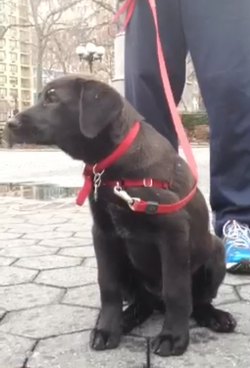 Alex, on his last morning. Alex, on his last morning. 7 tips to keeping dogs safe on city streets February 20, 2013, Annie, On Saturday, something very sad happened: One of my puppy clients was killed by a truck on First Avenue. Alex was a 14-week-old lab mix who’d come to live with Manhattanites Jim and Amy by way of Social Tee Animal Rescue in the East Village. He’d been coming to puppy class with me at my training facility, School For The Dogs. Friday afternoon, I went over to help Amy and Jim get him used to his harness, and we worked on helping him be less fearful about doorways — for whatever reason, he was scared to leave the threshold of their apartment door. By the time I left, he was waltzing back and forth through that door. Amy and Jim were dream clients. They did everything right. They were educating themselves about dog parenthood from the excellent book, The Other End Of The Leash by Patricia McConnell, and were feeding him high quality food out of the “work to eat” toys my training partner and I always recommend. I left Friday’s session feeling so happy that Alex had found this couple, that they’d found Alex, and that I was playing some small part in helping this family get started on the best possible foot. It was one of those I have the best job moments. The next morning, I got a garbled voicemail from Amy. The only word I could make out was “truck.” I called her back, fearing the worst. She told me that some girls had stopped to pet Alex on the street, and somehow, in playing with him, they managed to undo his leash. He ran into the street and was hit. He died right away. (As if my heart wasn’t broken enough, she ended the call by telling me that, on their way out for that last walk, he ran through the apartment door like it was his favorite thing to do in the world.) Opening up your home and heart to an animal whose life is likely going to be shorter than yours means accepting that, at some point, there will be heartbreak. But you could say that about entering any kind of meaningful relationship. Whether it’s a child or a lover or a pet, there’s always that risk of loss, even if you’re the most careful custodian. It’s part of the bargain we make when we let ourselves love. As far as I’m concerned, there is no reason here. No fingers to point or proscriptions to make. A puppy is dead, and it sucks. Nevertheless, I’ve been digging in my brain to try to find some way to make sense of this tragedy –surely there must be some lesson to impart that will help me swallow the sadness. So, in Alex’s honor, and to make myself feel a little better, I offer a few suggestions on how we can keep our beloved puppies as safe as possible on the city streets. 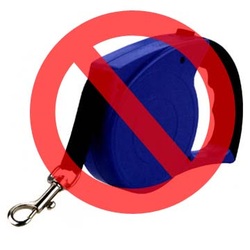 1. Use a fixed-length leash A leash is the most important safety tool any dog walker has. Retractable leashes, which can change length based on the click of a button, mean that the radius wherein a dog can go is not fixed. And that defeats the major purpose of having your dog on a leash to begin with. Also: many retractable leashes have very thin cords, which can snap or twist. And these leashes have a snapping mechanism, of which I’m not a fan: Their retractability means that, if dropped by mistake, it can snap towards the dog –which usually means a big plastic handle hurdling toward their face. This can spook a dog, causing him to run. It’s more dangerous than if you just accidentally drop a nylon leash for a second. While a leash of this sort might be a nice way for a dog to have some autonomy on, say, a rural trail, I think they have no place on a city street. If you must use a leash like this, keep it in a locked position at all times. 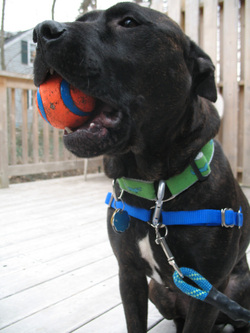 Attached a harness to a collar using a carabiner. Attached a harness to a collar using a carabiner. 2. Attach the leash to both a harness and a collar
If you are using a collar and a harness, clip your dog’s leash to both. I didn’t instruct Amy and Jim to do this, but how I wish I had. Some dog walkers I know affix a carabiner to both the collar and the harness. (Jessica Dolce of the blog Notes From A Dog Walker offers five excellent tips on improving leash safety with this one simple tool). I also know dog walkers who always walk their clients dogs with two leashes, just in case one fails. Like doubling up on condoms, one walker friend describes this procedure as “kind of a drag.” But much less of a drag than losing a dog — and your job — in one fell swoop. 3. If necessary, walk your dog with a muzzle If you have any fear of your dog biting, or if your dog is a garbage eater, invest in a muzzle. Many people resist muzzles. But city streets are places where unexpected things can happen, and dogs who are scared are likely to bite. if you have even the smallest fear that your dog might nip another dog or a person on the street, or if you worry about your dog ingesting cigarette butts, a muzzle is a must have. 4. Choose your walking path wisely You know how anxious you feel when your trying to maneuver your way down 6th Avenue at lunchtime? Imagine how your dog feels trying to do the same thing at ankle level. To reduce walking stress, pick strolling paths that are as open as possible. There are a million things that could happen on a city street that could spook a dog, most of which you cannot control. The best you can do is try to guess what’s going to be the quietest route. Bonus points for walking on the building side of the sidewalk, rather than the curb side. If your dog does get loose, this will mean a little bit more a buffer area where you might be able to grab him before he enters traffic. 5. Always ask for a ”sit” at the curb Your dog can have different cues for “sit.” One might be the word “sit.” One might be a hand single. And one should be a visual, environmental cue: The sight of a curb. Every time you get to any curb, cue your dog into a sit (use a food lure if you need to — do whatever you need to do get their butt on the ground). You can then either reward the sit with a food treat, or with the real life reward of the opportunity to get up and keep walking when you say “Okay.” With enough repetition, your dog will associate the curb with sitting and it won’t be something that you even have to ask for. The goal here, of course, is that, if ever given the opportunity to cross a street off leash, he will first sit and wait for your signal to go. 6. Carry treats When you have a dog, you’re not just training him to behave properly on the street — your training people to behave properly, too. “Proper” might be different to different people. My ex, for example, will never let anyone touch a dog when on a walk. “Would you let someone pet a baby?” he says. My rules aren’t so stringent. I want my dog to be able to interact with people. But, I do think that people do a lot of improper things when greeting unknown dogs on the street. They often get in a dog’s face, which is rude, or pick up a dog, which can be dangerous and unpleasant to the dog. They squeal and kiss, neither of which is necessarily polite in the dog world. The best way to avoid these kinds of interactions? When a person shows interest in your dog, hand him a treat and ask him to give it to your dog. Your dog shouldn’t have to sit for it or, or do anything for that matter. The “trick” they’re being rewarded for is just the behavior of co-existing with a new human. It’ll help your dog build good associations with that kind of person (be it a giddy child, man with cane, or a woman with beard), and will give the person a safe way to interact with the dog. 7. Communicate with other people on the street before letting them, or their dog, interact with yours Dogs can’t talk, but we can. Before you let your dog greet another dog, ask the owner if their dog is friendly. Plenty of dogs can’t do safe leash greetings with other dogs on the street, but that doesn’t mean everyone involved can’t leave the situation unmarred. Just ask: ”Is it okay if my dog says ‘Hi?’ to your dog?” If the human says “No,” it’s probably not because he or she is an asshole. It’s because they are looking out for their dog’s safety. And for your dog’s safety. And yours! That kind of person deserves a treat. Likewise, many dogs don’t want to be pet by strangers. The best way to judge if a situation is safe is simply to thank people when they ask, “May I pet your dog?” Reward this behavior in humans, and more people will do it. And we will all be rewarded by creating a world where there are fewer dead puppies to cry about. Our vet offers common-sense things you can do to keep your dogs healthy and safe. As Jan. 1 approaches each year, I am asked what sort of new year's resolutions I recommend for dog owners. In fact, not long ago the Dogster editorial staff posed the question to me. I'm not one to let down my editors if I can avoid it, so this article is dedicated to new year's resolutions for dog owners.
I have heard that some motivation experts advise making only one new year's resolution, but this article would be a bit light if I offered only one, so there will be several. However, if you resolve to do only one new thing for your dog in 2013, here is what I recommend: Resolve to brush your dog's teeth. Please don't laugh. I have been recommending tooth brushing for my entire career, and I put my money where my mouth is: My pal Buster's teeth get brushed every night. For years I suffered ridicule and derision (often from some of my friends who are veterinarians) for this activity. However, I'm getting the last laugh now -- Buster's teeth are nearly perfect, and many of the people who have made fun of me have dogs who need dental work. Dental disease is the No. 1 -- by a mile -- medical problem of dogs. It occurs in more than 80 percent of adult dogs. It causes pain, bad breath, and lethargy. It might be linked to heart disease, bodily inflammatoy conditions, diabetes, and cancer. Advanced dental disease requires treatment with general anesthesia for root planing, supra- and subgingival scaling, and (often) extractions or other advanced periodontal procedures. It's expensive, and it's no fun. Dental disease is almost totally preventable with tooth brushing. I recommend using a human soft-bristled toothbrush. Do not, however, use human toothpaste. Human toothpaste contains fluoride and is not safe to swallow. There are a variety of veterinary toothpastes widely available in pet stores. Gently brush the outside all of the teeth, focusing on the gum line in a circular fashion. It is not necessary to open your dog's mouth in order to brush teeth -- the toothbrush can be slipped between the lips. Remember that dogs have relatively massive mouths, and that there are teeth all the way in the back. The current recommendation is to brush teeth at least once every 24 hours. Clean teeth can lead to a cleaner bill of overall health. The overwhelming majority of dogs will tolerate tooth brushing. However, sometimes it is necessary to wade into the process gradually by first habituating your dog to having his mouth handled, then using a toothbrush without paste, and finally graduating to full brushing with paste. Some hardcore adherents to certain diets believe that their diets will prevent dental disease in dogs. My experience? No diet can accurately make this claim. Even if you believe that your dog's diet is good for the teeth, no harm will come to your dog from brushing the teeth as well. There is no reason -- other than the nuisance of it -- not to brush your dog's teeth. Period. A few weeks ago I was walking Buster when I saw an off-leash Yorkshire Terrier trot across a street and approach us. His owner showed up a few minutes later, busily engaged in sending a text message to someone. Although I'm sure he won't, I would love for that dog's owner to resolve to use a leash and pay attention. Leashed dogs are almost never hit by cars (although I have treated a few who were struck by vehicles that drove onto sidewalks). Fights between two leashed dogs are vanishingly uncommon. The Yorkshire Terrier in question could have been creamed by a car as he crossed the street ahead of his owner. And, if Buster were less friendly, the Yorkie could have been mauled or killed. Leashes make for happy, healthy, safe dogs. I also recommend that dog owners resolve to take time to properly socialize their dogs. Well-mannered dogs are joys to be around. They don't bark at strangers, knock over old ladies, lunge at other dogs, or chase joggers. Most important, they don't give ammunition to people who fear or dislike dogs -- you know, the people who would like to see dogs banned from parks, other public areas, and special events. Speaking of dog haters, they get especially mad when they step in dog poop. So, for that matter, do dog lovers. Please, resolve to be a decent member of society and pick up your dog's poop. Finally, if your dog hasn't had a checkup in a while, I recommend that you resolve to take him in for a physical. However, if your dog has been getting shots every year, I recommend that you rethink your dog's vaccine schedule. I am surprised by how many adult dogs get every vaccine every year despite the mounting evidence that this is probably not the best thing. Talk to your vet about which (if any) vaccines are appropriate based upon your dog's lifestyle and age. And while you're there, talk about starting a broad spectrum heartworm and roundworm preventative. These help keep your dog free of potentially dangerous parasites, some of which can spread to humans. Best wishes for a happy new year to all! Source: http://www.dogster.com/lifestyle/dog-health-new-years-resolutions-best-owner-2013?utm_source=Sters+Newsletter+Subscribers&utm_campaign=3b72aeaddb-01022013_Dogster_newsletter&utm_medium=email A dog should always be a considered choice and NEVER an impulse buy. Please help us spread the word about this during this high gift-giving season. 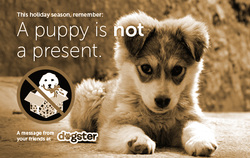 This Holiday Season, Remember: A Puppy Is NOT a Present. We all have them. The in-law who unapologetically keeps an "outside dog." Or the friend who thought it was cool to let the family retriever shack up with the dog down the street so her kids could witness the "miracle of life." Or the coworker who surprised his fiancee on her birthday with a Yorkie puppy from the pet store. And let's be honest: They make us feel like complete failures as responsible pet people. Yes, our own dogs went to puppy socials, play with lead-free toys, and were "fixed" at an appropriate age. But maybe we didn't share that article on where pet store puppies come from enough on Facebook, or made our stance on the benefits of spay/neuter loud enough for those in our immediate networks to hear. As the holidays approach, so does an opportunity to educate the people around us on a timely issue: that of puppies being given as holiday presents without too much though or planning beforehand. I don't know about you, but I cringe inwardly when I see stock photos of dogs with bows strapped to their heads displayed in wrapped boxes beneath Christmas trees. It's an image that's readily accepted all over the world. But that doesn't make it right. Because a puppy should never be: 1. A novelty item. One that was a smash hit on Christmas morning, but an undesirable chore in the post-holiday world. A dog is at the very least a 10-year commitment, and if your intended recipients are not up to the task, you have no business gifting them with one. 2. A stuffed toy. Some dogs might resemble one (I'm looking at you, Boo!) but again, the responsibilities associated with toy vs. dog aren't remotely in the same region. And if your daughter is obsessed with Pomeranians because of Boo, there's a stuffed animal replica you can buy her. 3. An imposition. Just because you thought a puppy would make a great gift doesn't mean the recipient does. When your big "surprise" goes south, are you prepared to care for the pup for the rest of its days? We hope your backup plan doesn't involve dumping him at the already-overcrowded local shelter. 4. An impulse buy. If your family isn't up to the commitment, you can't just return that puppy to the pet store. It's not unusual for puppies returned to pet shops to be put down in horrendous ways, either. Please, please, please do your homework if you're adding a dog to the family. Research dog breeds to find the best fit. Find a breed-specific rescue group or a reputable hobby breeder if you must have a purebred. Or go to the shelter as a family and make an informed decision together. To be clear: We are not opposed to you adding a dog to the family during the holiday season if the addition is one planned far in advance. We only ask that you make an informed decision and not a knee-jerk one that is bad for everyone down the line. This time of year is notorious for last-minute impulse buys, so I hope you understand the concern. If you're a regular Dogster reader, you probably already know these things. But it's highly possible there are people you know who don't. You can help us reach those people by sharing this article, or using the graphics below on your Facebook and/or Twitter feeds. We hope they'll be a great conversation starter for your friends and family. Source: http://www.dogster.com/lifestyle/a-puppy-is-not-a-christmas-present?utm_source=Sters+Newsletter+Subscribers&utm_campaign=a53fc03416-12042012_Dogster_newsletter&utm_medium=email A photo isn't just worth a thousand words -- it might just save your dog's life. Here are some you should have on hand at all times.
Your smartphone's photo album can be much more than a brag book filled with snapshots of your favorite four-footed friends. It can actually be a life-saver -- especially if, say, you're traveling and you forgot not only your dog's medication, but its name and dosage -- or your dog sitter runs out of said med and needs your help refilling it. If you're like us, you already use your notes app to keep track of everyday reminders. But a photo is worth a thousand characters, and images are so much more effective as mnemonic devices! Dogster EIC Janine Kahn keeps many sharp photos of her Italian Greyhound, Moxie, on her iPhone. Here are eight items that can easily be recalled -- not to mention texted or emailed to the appropriate person -- with a snap of your camera's shutter button. Please take these pictures without delay, and use the comments section to tell us what we've left out! 8 Important Dog-Related Photos to Have on Hand: 1. Pictures of your dog's current medications; make sure the RX name and dosage are clearly visible in the photos. 2. Pictures of your dog, in case (heaven forbid) he or she goes missing and you have to create a Lost Dog flyer on the double. A snapshot of Moxie's tag collar and license. 3. Closeup shots of your dog's license and vaccination tags -- make sure they're in focus so all letters and numbers are legible. 4. A picture of your dog's microchip ID info, and a Web site screen shot of Home Again (or whichever company's chip is implanted in your dog). Some vaccines Moxie received as a puppy. 5. A picture of your dog's food -- the package it comes in -- to make it easier for your dog sitter to restock in case the supply runs out in your absence. 6. A picture of the business card of the pet-supply store where you buy your dog's food, especially if it's a prescription diet. Moxie's microchip number. 7. A picture of your veterinarian's business card, clearly showing the phone number, email, and physical location address (or a screen shot of the hospital's Web site). A screen grab of the emergency hospital that's nearest Janine and Moxie. 8. A picture of the business card of the nearest 24-hour emergency vet hospital (or screen shot of the hospital's Web site). Dogster readers, what would you add to this very important list?
BY Julia Szabo  A popular misconception is that dogs age 7 years for each calendar year. In fact, canine aging is much more rapid during the first 2 years of a dog's life. After the first 2 years the ratio settles down to 5 to 1 for small and medium breeds. For large breeds the rate is 6 to 1, and for giant breeds the rate is 7 to 1. Thus, at 10 years of age a Great Dane would be 80 years old while a pug would only be 64. How to Tell a Dog's Age If you've taken in a dog whose age is unknown, there are some ways to determine his age. Here are some things vets check to get a general sense of how old a dog is: The Teeth: Dogs usually have a set of permanent teeth by their seventh month, so if you've come across a dog with clean pearly whites, he is likely a year old or thereabouts. Yellowing on a dog's back teeth may put the dog between one and two years of age, while tartar build-up at a minimal level could mean you have a dog between 3 and 5. Missing teeth or severe wear usually means the dog is a senior and could use some special dental care. Muscle Tone: Younger dogs are more likely to have some muscle definition from their higher activity level. Older dogs are usually either a tad bonier or a little fatter from decreased activity. The Coat: A younger dog usually has a soft, fine coat, whereas an older dog tends to have thicker, coarser (and sometimes oilier) fur. A senior dog may display grays or patches of white, particularly around the snout. The Eyes: Bright, clear eyes without tearing or discharge are common in younger dogs. Cloudy or opaque eyes may mean an older dog. Use this chart to calculate your dog's age: 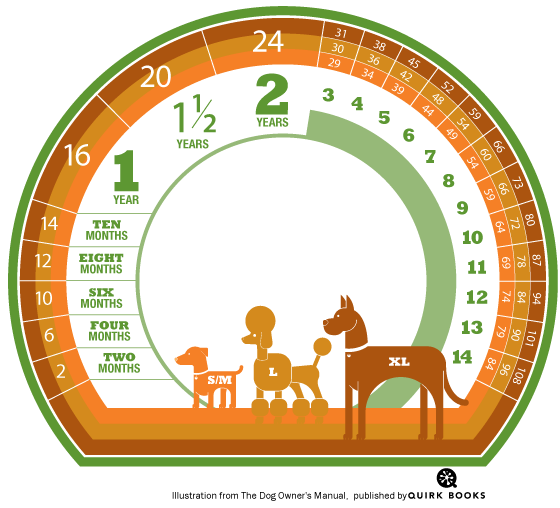
Old Age in Dogs
The age at which a dog can be considered elderly varies widely among models. In general, the larger the dog, the more quickly it declines. For instance, a Great Dane could be considered "senior" at age 5, while a smaller toy poodle would still be spry at twice that age. Remember, however, that just because a dog is chronologically old doesn't mean that an endless series of malfunctions is in store. In many cases an elderly dog can enjoy many healthy, active, pain-free years. One of the best ways to prolong the life and improve the functions of an elderly dog is to carefully regulate its fuel intake. Older dogs exercise less and thus need fewer calories. And since age reduces their ability to digest and absorb nutrients, high-quality food specifically formulated for their needs is a necessity. Excessive amounts of protein, phosphorus, and sodium can aggravate kidney and heart problems, so most such foods contain smaller amounts of higher-quality protein, along with reduced quantities of other elements. Levels of vitamins, zinc, fatty acids, and fiber, however, are increased. BY http://www.dogster.com/dogs-101/calculate-dog-age-in-dog-years Preventing Dog Heat Stroke During Summer Walks By Vera Torres
The majority of people love the Summer Season, especially in New York City, however, warm and humid weather can be a threat for your dog's health by suffering a heat stroke. First of all you should be aware that certain dog breeds are more prone to suffer a heat stroke because of their short-nose, or large dogs because of their wide chests. Then if you own a dog that falls in either of these two categories, you must be even more extra careful! For example, an English Bull-dog is short-nose breed, or a Weimaraner dog is a large wide chested breed. Generally, any breed is very susceptible to heat. Secondly, it is important to understand that dogs do not cool off as easily as human beings because dogs can't sweat. Dogs do have sweat glands on their feet, but remember that their body is covered entirely with fur. Therefore, the method dogs use to realize the heat from their bodies is by breathing or panting which it is not enough if a dog is exposed to high temperatures. Dogs can easily, in as minimum as 15 to 20 minutes, get a heat stroke. Here are a few tips to help your dog beat the summer's heat:
Remember immediate emergency measures are essential for a dog who suffers a heat stroke. That can draw the line between death and life. However, it is better to play it safe and preventing a heat stroke is the ultimate way to go. Many people use crates for housetraining their puppies or keeping younger dogs out of trouble when nobody is home. Often, once a dog is successfully potty trained, the crate ends up on Craigslist or Freecycle, ready for a new home.
Keep in mind that crates are not just for puppies, and that crate training, like all training, is a "use it or lose it" enterprise. Dogs should learn to be crated and practice crating throughout their lives. Even if you don't need your crate for potty training anymore, you will be glad to have it in case of emergencies. Casey Lomonaco owns Rewarding Behaviors Dog Training in Binghamton, NY. |
NYC walkers Blog
Trusted and Respected NYC Dog Walkers-Insured & Bonded. Archives
May 2021
Categories
All
|
 RSS Feed